
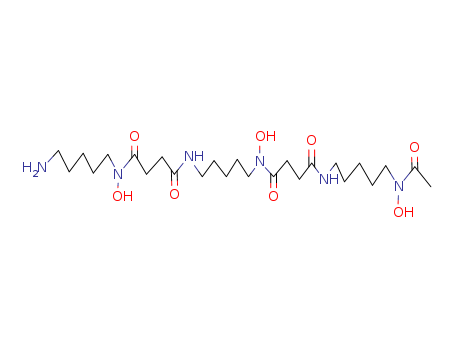
Deferoxamine
Contact usQuality manufacturer supply Deferoxamine 70-51-9 in stock with high standard
- Molecular Formula:C25H48 N6 O8
- Molecular Weight:560.692
- Melting Point:139°C
- Refractive Index:1.5540 (estimate)
- Boiling Point:627.9°C (rough estimate)
- PKA:9.08±0.50(Predicted)
- PSA:205.84000
- Density:1.212g/cm3
- LogP:2.40420
Deferoxamine(Cas 70-51-9) Usage
|
Manufacturing Process |
O-Benzylhydroxylamine hydrochloride (4.7 g, 29.7 mmol) was mixed with 5 ml of water and 11 ml of methanol at 0°C and the pH adjusted to 4.7 using 6 N KOH. The aldehyde, 4-cyanobutanal (2.6 mL, 27 mmol) was added to the hydroxylamine and the mixture allowed to warm to room temperature. The pH was maintained by addition of further 6 N KOH. After 1 h, the reaction was cooled to 0°C, and sodium cyanoborohydride (1.26 g, 20 mmol) was added. The pH was adjusted to 3 and maintained by addition of saturated HCl in methanol. When the pH stabilized, the reaction was warmed to room temperature and stirred for 3 h at a PH of 3. The reaction mixture was then poured into ether and made basic with 6 N KOH. The aqueous layer was extracted with ether (3x50 mL). The extracts were combined, washed with brine, and dried over magnesium sulfate. The solvents were removed and the resulting liquid distilled at 150°-151°C (0.6 mm) to give 4.65 g (84% of Obenzyl-N-(4-cyanobutyl)hydroxylamine. 2.8 g (13.7 mmol) of the above prepared hydroxylamine in 23 ml of pyridine and 2.1 g (20.8 mmol) of succcinic anhydride, initially heated at 100°C for 1.5 h then allowed to cool to room temperature and stirred overnight. The pyridine was removed in vacuum and the residue was dissolved in a minimal amount of chloroform, and the residue was dissolved in ether, which was extracted three times with 20% potassium bicarbonate (3x50 mL). The aqueous solutions were combined, acidified, extracted with ether, dried, filtered and evaporated; the residue was then chromotagraphed on silica gel to give 4.12 g (98%) of N-(4-cyanobutylN-(benzyloxy)succinamic acid.2.6 g (12.75 mmol) of O-benzyl-N-(4-cyanobutyl)hydroxylamine, 17.24 mL of pyridine and 17.2 mL of acetic anhydride were stirred under argon at room temperature for 24 h. Then the excess pyridine and acetic acid anhydride were removed by vacuum. The resulting oil was taken up in chloroform, which was extracted with 1 N HCl (2x50mL), washed with sodium bicarbonate and brine, dried, over sodium sulfate, filtered and evaporated to give 3.4 g (100%) of N-(4-cyanobutyl)-N-(benzyloxy)acetamide as a light oil. 1.4 g (5.7 mmol) of this product, 2.6 g Raney nickel, 15 ml of ammonia saturated methanol and 4 ml of saturated ammonium hydroxide were cooled in a ice bath and anhydrous ammonia was allowed to bubble through the solution for 10 min. The bottle was pressurized to 50 psi with hydrogen and shook for 3 h. Then the catalyst was filtered and the solvents evaporated. The crude material was chromatografed on silica gel to gave a 1.25 g (88%) of N-(5- aminopentyl)-N-(benzyloxy)acetamide.1 g (4 mmol), of the above acetamide, 1.46 g (4.79 mmol) of N-(4- cyanobutyl-N-(benzyloxy)succinamic acid, 1.24 g (6 mmol) of DCC and 70 mg of DMAP was cooled to 0°C for 0.55 h in 28 mL of chloroform. The mixture was allowed to warm to room temperature and stirred 24 h. Then it was again cooled to 0°C, filtered and chromatografed to yield 2.1 g (98%) of N-(4- cyanobutyl)-3-[{5-N-benzyloxy)acetamido)pentyl}carbomoyl]-Obenzylpropionohydroxamic acid. This product (1 g) was hydrogeneted by analogue with N-(4-cyanobutyl)-N-(benzyloxy)acetamide using Nickel Raney as catalyst to give 1 g (88%) N-(5-aminopentyl)-3-[{5-(N - benzyloxyacetamido)pentyl}carbomoyl]-O-benzylpropionohydroxamic acid, which produced by the reaction with DCC described above 0.78 g (88%) of N- [5-[3-[{4-cyanobutyl)(benzyloxy)-carbomoyl]propionaminoamido]pentyl}-3- [{5-(N-bebzyloxyacetamido)pentyl]-carbomoyl]-O-benzylpropionohydroxamic acid. The purity of all products confirmed with1H-NMR and elemental analyses. The last compound (0.165 g, 0.2 mmol) was reduced in methanol, 2.7 mL of 0.1 N HCl and 0.27 g of 10% Pd on C. The hydrogenation was carried out at one atmosphere of hydrogene for 7.5 hrs. The solution was filtered, the solvents were removed and the residue was washed with cold methanol, and then chloroform to give 0.1 g (84%) of product. This material had melting point 167°-168°C [Prelog, supra] and was identical to an authentic sample by 300 MHz NMR [sample of deferrioxamine B supplied by dr. Heirich H. Peter at Ciba-Geigy, Basel, Switzerland]. |
|
Environmental Fate |
Localized infusion or injection site reactions may occur with deferoxamine administration, such as pain, urticaria and flushing of the skin. Hypersensitivity reactions have been documented with both acute and chronic administration of deferoxamine. Some of the more serious side effects include infusion rate-related hypotension, renal insufficiency, neurotoxicity, growth retardation, pulmonary toxicity, and infections. Deferoxamine may induce venous dilation when given at doses greater than 15 mg kg-1 h-1 leading to poor venous return, depressed cardiac output, and eventually hypotension. Increased levels of histamine have been noted during hypotensive episodes, although pretreatment with antihistamines has not been shown to stop the reaction. An acute decrease in glomerular filtration rate and renal plasma flow secondary to hypotension is the possible mechanism underlying the nephrotoxicity induced by deferoxamine. Depletion of iron, translocation of copper, and chelation of other trace elements including zinc may interfere with critical iron-dependent enzymes, causing oxidative damage within various tissues. These are possible mechanisms thought to be responsible for deferoxamineinduced neurotoxicity, growth retardation, and pulmonary toxicity. In vitro studies have shown that deferoxamine inhibits the synthesis of prostaglandin, hemoglobin, ferritin, collagen, and DNA. The iron–deferoxamine complex, ferrioxamine, is a growth factor for many bacteria and fungi. Deferoxamine has been associated with Yersinia enterocolitica overgrowth and fatal cases of mucormycosis with prolonged therapy. |
InChI:InChI=1/C25H48N6O8/c1-21(32)29(37)18-9-3-6-16-27-22(33)12-14-25(36)31(39)20-10-4-7-17-28-23(34)11-13-24(35)30(38)19-8-2-5-15-26/h37-39H,2-20,26H2,1H3,(H,27,33)(H,28,34)
70-51-9 Relevant articles
Convergent Synthesis of Macrocyclic and Linear Desferrioxamines
Chiu, Cheng-Hsin,Chung, Wen-Sheng,Jheng, Ting-Cian,Mong, Kwok-Kong Tony,Peng, Bo-Chun
, (2020/06/17)
Polyhydroxamate desferrioxamines (DFO) a...
Engineering a cleavable disulfide bond into a natural product siderophore using precursor-directed biosynthesis
Richardson-Sanchez, Tomas,Codd, Rachel
, p. 9813 - 9816 (2018/09/10)
An analogue of the bacterial siderophore...
Glycation Cross-link Breakers to Increase Resistance to Enzymatic Degradation
-
, (2013/12/03)
The present invention relates to a metho...
Polymers with structure-defined functions
-
, (2011/06/23)
An alternating copolymer comprising a ba...
70-51-9 Process route
-
-
C46H64N8O8

-
-
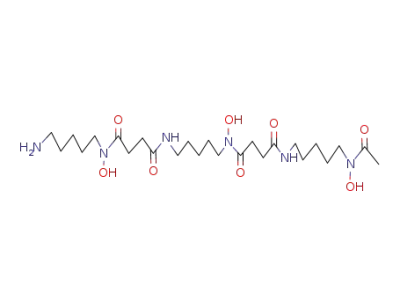
70-51-9
deferoxamine
| Conditions | Yield |
|---|---|
|
With
palladium 10% on activated carbon; hydrogen; acetic acid;
In
methanol;
at 25 ℃;
for 0.333333h;
under 760.051 Torr;
|
50% |
-
-
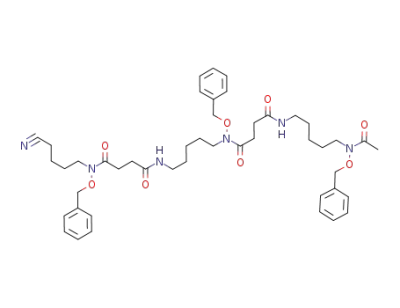
112139-65-8
N'-<5-<<4-<<5-
-
-
70-51-9
deferoxamine
| Conditions | Yield |
|---|---|
|
With
hydrogenchloride; hydrogen;
palladium on activated charcoal;
In
methanol;
|
70-51-9 Upstream products
-
402913-84-2
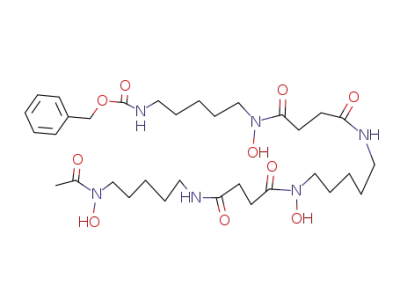
1-Carbobenzoxyamino-6,17-dihydroxy-7,10,18,21-tetraoxy-27-(N-acetyl-hydroxyamino)-6,11,17,22-tetraaza-hepteikosan
-
112139-65-8
N'-<5-<<4-<<5-
-
129245-21-2
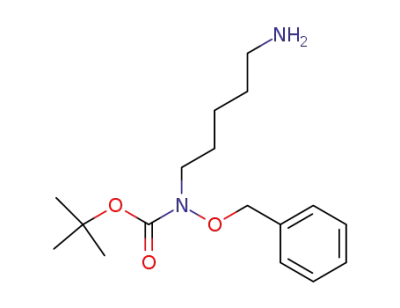
O-benzyl-N-(5-aminopentyl)-N-(tert-butoxycarbonyl)hydroxylamine
-
129245-24-5
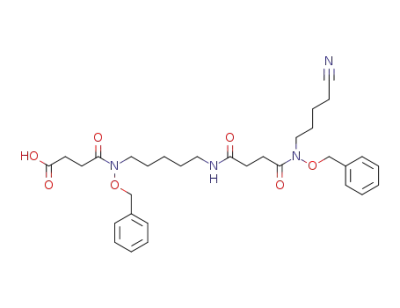
5,16-bis(benzyloxy)-20-cyano-4,12,15-trioxo-5,11,16-triazaeicosanoic acid
70-51-9 Downstream products
-
84211-47-2
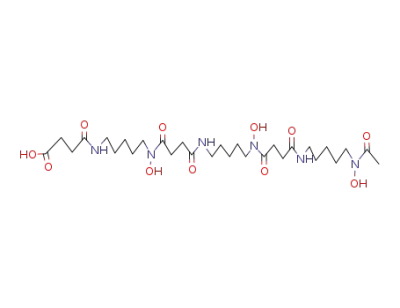
N-Succinyl-desferri-ferrioxyamin B
-
105185-40-8
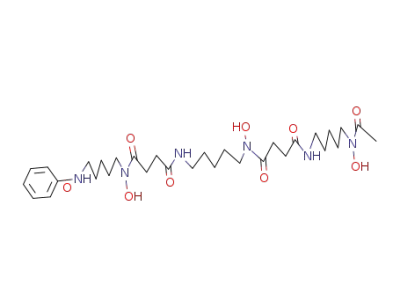
benzoylamide deferoxamine
-
1222468-90-7
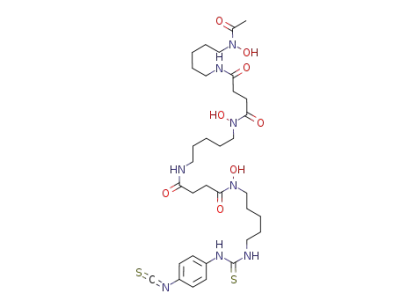
N-[5-({3-[5-(acetyl-hydroxy-amino)-pentylcarbamoyl]-propionyl}-hydroxy-amino)-pentyl]-N'-hydroxy-N'-{5-[3-(4-isothiocyanato-phenyl)-thioureido]-pentyl}-succinamide
-
14836-73-8
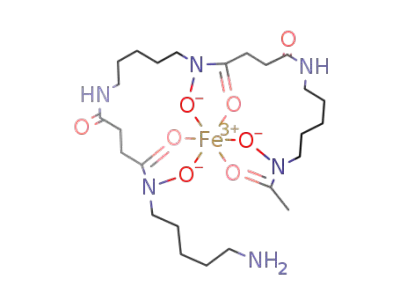
deferoxamine iron(III) complex
Other Customizd Materials
-
(dimethylphosphinyl)methanol
CAS:5850-00-0
-
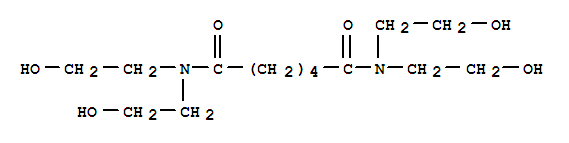
N,N,N',N'-Tetrakis(2-hydroxyethyl)adipamide
CAS:6334-25-4
-
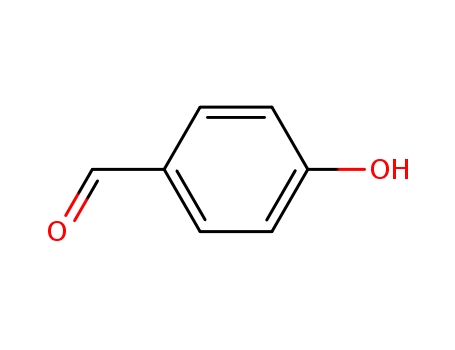
4-Hydroxybenzaldehyde
CAS:123-08-0
-
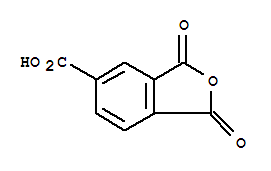
PHTHALICANHYDRIDE/TRIMELLITICANHYDRIDE/GLYCOLSCOPOLYMER
CAS:186688-25-5
-
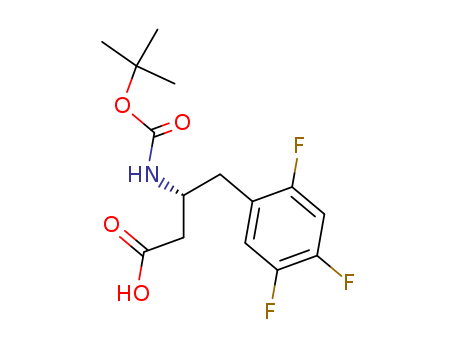
BOC-(R)-3-AMINO-4-(2,4,5-TRIFLUORO-PHENYL)-BUTYRIC ACID
CAS:486460-00-8
-
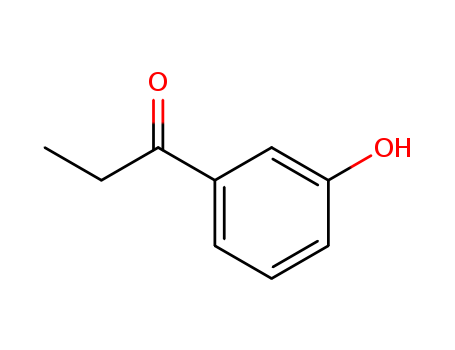
3'-Hydroxypropiophenone
CAS:13103-80-5
-
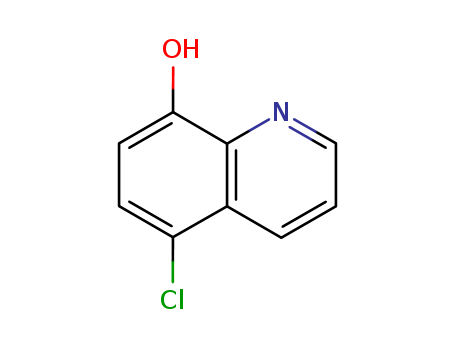
5-Chloro-8-hydroxyquinoline
CAS:130-16-5
-
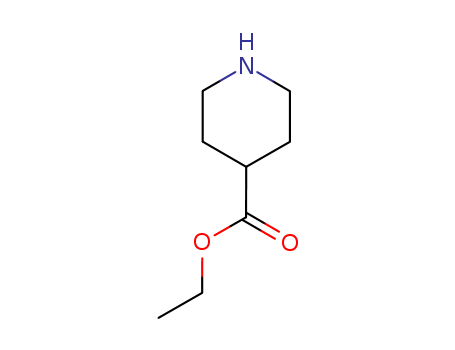
Ethyl 4-piperidinecarboxylate
CAS:1126-09-6
NEWSLETTER
For inquiries About Our Products, Please Leave Your E-Mail To Us And We will Contact You Within 24 Hours.